


Picking a carrier feels straightforward until a container sits at the terminal, a pallet goes missing, or an invoice arrives with three charges nobody mentioned. Most freight problems trace back to the choice made before the first pickup.
The stakes are higher now. The Vancouver Fraser Port Authority reports that the port handled a record 170.4 million tonnes of cargo in 2025, up almost 8 per cent on the previous year. Busy terminals, full warehouses and stretched trucking capacity leave little room for a provider that runs late or cuts corners.
This guide sets out what to check when comparing any Vancouver cargo company in 2026: credentials, insurance, service range, storage, pricing and communication. It also includes a checklist you can take into your next supplier call.
Why Your Choice of Vancouver Cargo Partner Matters More in 2026
Vancouver is Canada’s largest port. According to the port authority, it moves more cargo than the next five largest Canadian ports combined and connects Canadian businesses with more than 170 international markets. Its container terminals handled around 3.8 million TEUs in 2025, a new high.
For shippers, growth on this scale brings a practical consequence. More freight competes for the same trucks, terminal slots and warehouse space. A carrier with a solid schedule, backup capacity and nearby storage can absorb a delayed vessel. One without those things passes the delay straight to you.
Trade patterns are also shifting. The port authority notes that over 85 per cent of the cargo moving through its terminals in 2025 supported commerce beyond the United States. If your supply chain now touches Asian or European markets, you probably need a partner who understands port work as well as long haul trucking.
What a Vancouver Cargo Company Actually Does
The term covers a wide range of businesses, from a single-truck operator to a full logistics provider. Before you compare quotes, know which services you are buying.
| Service | Best suited to | Typical use |
|---|---|---|
| Truckload (FTL) | Full trailer loads moving between two points | Manufacturers, distributors, large retail replenishment |
| Less than truckload (LTL) | Smaller shipments that share trailer space | Regular pallet deliveries, growing businesses |
| Drayage | Container moves between port, rail yard and warehouse | Importers and exporters using Vancouver terminals |
| Intermodal | Long-distance freight combining rail and truck | Cross-country routes where cost matters more than speed |
| Cross-border | Shipments between BC and the United States | Exporters, retailers, food and beverage suppliers |
| Special cargo | Oversized, sensitive or time-critical freight | Machinery, high-value goods, urgent deliveries |
| Warehousing and storage | Holding, sorting and distributing inventory | Buffer stock, cross-docking, e-commerce fulfilment |
7 Checks Before You Hire a Vancouver Cargo Company
1. Verify safety credentials and carrier status
In British Columbia, commercial vehicles plated in the province must operate under a National Safety Code (NSC) safety certificate. The certificate confirms a carrier meets minimum standards of fitness, including knowledge of safety rules and proper record keeping.
You do not have to take a sales rep’s word for it. BC’s Commercial Vehicle Safety and Enforcement (CVSE) branch publishes a list of certificate holders that shows each carrier’s legal name, home city, certificate status (Active, No Active Vehicles or Suspended), safety rating and fleet size.
2. Ask exactly what insurance and liability cover
Two separate things get confused here. Carrier liability is what the trucking company owes if your goods are lost or damaged, and it is often limited by contract to less than the goods are worth. Cargo insurance is a policy that covers the full value.
- Request a current certificate of insurance, not a verbal assurance.
- Ask for the liability limit per shipment, in writing.
- Find out who pays for goods damaged in storage, at a cross-dock or on the dock at delivery.
- For high-value freight, price a separate cargo policy and compare it with the carrier’s limit.
3. Match the service range to your freight
A provider that only runs full truckloads will struggle to serve a business shipping a few pallets a week, and the reverse is also true. Look for a partner whose services line up with how you ship today and how you expect to ship in two years.
- Regular smaller shipments usually suit less-than-truckload services, where you pay for the space you use.
- Importers and exporters need a partner who handles container drayage in Vancouver between terminals, rail yards and warehouses.
- Businesses selling into the United States should confirm they have cross-border transportation from Vancouver covered, including customs paperwork such as eManifest filings and coordination with a licensed customs broker.
Logistics trucking company or independent owner-operator?
A single-truck operator can be excellent value for a simple, repeatable run. A logistic trucking company earns its higher rate when things go wrong, because it has other drivers, dispatch support and often a warehouse behind the truck.
| Factor | Owner-operator | Logistics trucking company |
|---|---|---|
| Backup capacity | Limited; a breakdown can stop the job | Other trucks and drivers can cover |
| Storage and handling | Usually none | Often available on site or nearby |
| Paperwork and tracking | Varies by operator | Typically systemised, with one contact |
| Price | Often lower for simple runs | Higher, but with less delivery risk |
4. Check storage logistics in Vancouver, not only trucking
Freight rarely goes from vessel to customer in one move. Containers arrive before you have shelf space. Retail deliveries need repacking. Duty paid stock needs to sit somewhere close to your buyers. That is where storage logistics in Vancouver becomes as important as the truck.
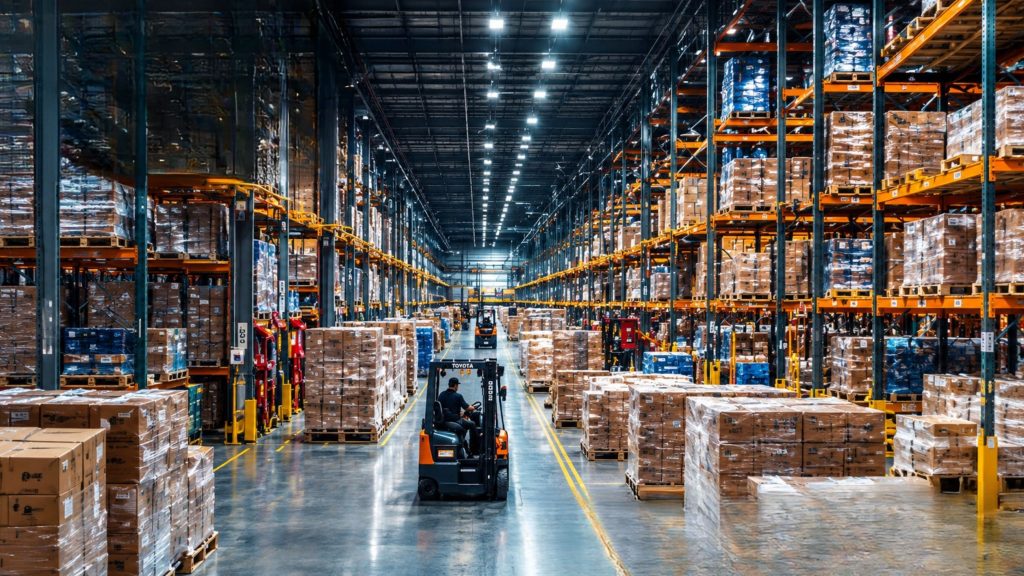
A provider that offers warehousing and storage in the Vancouver area alongside transport removes a handover. One team receives, stores and delivers, which usually means fewer delays and a clearer answer when something goes wrong. Ask about:
- Bonded space, if you want to defer duties on imported goods.
- Food-grade or beverage storage, and the audit reports that support it.
- Cross-docking, which moves goods from inbound to outbound trucks with minimal storage time.
- Fulfilment and e-commerce services, if you ship direct to consumers.
- How you will see stock levels, and how quickly receipts are confirmed.
5. Confirm they can handle special cargo
Standard freight tolerates a little rough handling. Oversized machinery, fragile equipment and urgent shipments do not. Ask whether the carrier has handled loads like yours, how it secures them, and who arranges permits and route planning for oversize moves.
A provider with dedicated special cargo handling will ask detailed questions about dimensions, weight and delivery access before quoting. That is a good sign. A carrier that quotes in two minutes without asking anything is guessing.
6. Test communication and visibility
You should know where your freight is without chasing anyone. Ask how tracking works, how proof of delivery is sent, and who you call when a driver is delayed. Also ask what support looks like outside office hours, because port and border delays do not keep a nine-to-five schedule.
7. Compare itemised quotes, not headline rates
A low base rate can hide a long list of extras. Ask each company to itemise the following so you can compare like with like:
- Line-haul or base rate
- Fuel surcharge and how it is calculated
- Waiting time or detention at pickup, delivery or the terminal
- Storage fees, including free days and daily rates after that
- Redelivery, after-hours and tailgate or liftgate charges

Green Flags and Red Flags at a Glance
| Green flags | Red flags |
|---|---|
| Valid NSC certificate you can confirm on the CVSE list | Cannot or will not give an NSC number |
| Insurance certificate and liability limits provided in writing | Vague answers about who pays for damage |
| Asks detailed questions before quoting | Quotes instantly with no questions |
| Itemised quote with accessorial charges named | One low number and “extras may apply” |
| Offers or coordinates storage close to the port | No answer when you ask where freight waits |
| Provides references from similar customers | Reluctant to name any existing clients |
How to Shortlist a Vancouver Cargo Company: A 5 Step Process
- Profile your freight. Note weights, dimensions, pallet counts, temperature or handling needs, and your typical routes.
- Shortlist three companies. Include at least one that offers both transport and storage.
- Verify credentials. Check the CVSE list and request insurance certificates.
- Request itemised quotes. Give each company identical shipment details.
- Run a trial shipment. Judge the result on communication and condition of goods, not price alone.
Common Mistakes When Choosing a Vancouver Cargo Company
- Choosing on rate alone. The cheapest quote often leaves out waiting time, storage days or fuel surcharges.
- Ignoring storage until it becomes a problem. Finding warehouse space after a container arrives is expensive and stressful.
- Assuming goods are fully insured. Carrier liability limits are frequently lower than replacement value.
- Leaving service levels unwritten. Pickup windows, delivery times and claims procedures belong in the agreement.
- Using one supplier for everything without checking fit. A great LTL carrier may be weak at port work.
Conclusion
The right Vancouver cargo company can help protect your schedule, your goods, and your margins. Verify the safety certificate, review the insurance terms, match the services to your freight, plan storage before you need it, and ask for an itemised quote. A trial shipment can also help confirm what the paperwork suggests. Logistics Vancouver can be a practical option for businesses looking for coordinated cargo transportation and storage support. With Vancouver’s busy freight environment, choosing a provider that combines trucking, storage, and clear communication can give your business a steadier footing, even when port activity is high.