

Quick Answer
Food distribution warehouses keep supply chains efficient by combining climate-controlled storage, organised inventory management, and fast cross-docking with reliable packaging services and cargo freight services. This lowers spoilage risk, speeds up order fulfilment, and keeps beverage storage and cross border shipping running smoothly for food and beverage brands across North America.
Walk into any well-run food distribution warehouses and you’ll notice something straight away: nothing sits still for long. Pallets move, temperatures are logged, orders get picked, and trucks pull in and out on a schedule that rarely slips. That constant, quiet motion is exactly what keeps grocery shelves stocked, restaurants supplied, and beverage brands shipping on time.
For businesses moving perishable or temperature-sensitive goods across Vancouver, Surrey and the wider Pacific Northwest, choosing the right warehouse partner isn’t just about square footage. It’s about how well that partner handles inventory accuracy, packaging, beverage storage, and cross border shipping without breaking the chain of custody or the cold chain.
It explains what these facilities are, why they can be important for supply chain efficiency and what to consider when assessing a logistics partner when you’re shipping snack foods, canned goods, beverages or even large retail goods such as furniture, which require tight and well-organized distribution networks to deliver.
What Are Food Distribution Warehouses?
Food distribution warehouses are specially designed structures that receive, store and move food and beverage products in a way that maintains good quality and safety. Unlike a standard storage unit, these units are built around temperature control, sanitation procedures and traceability since if a pallet is not handled properly, it can result in spoiled stock or failure to meet compliance requirements.
A properly managed food-grade facility separates dry goods from chilled and frozen inventory, tracks lot numbers and expiry dates, and follows strict cleaning schedules. This is the same standard AFS Transco applies across its Vancouver operations you can see how this works in practice on our page about food-grade warehousing in Vancouver, which outlines our approach to controlled, compliant storage.
Why Food Distribution Warehouses Matter for Supply Chain Efficiency
Efficiency in food logistics isn’t a single fix it’s the sum of several smaller systems working together. Here are the main levers that make the difference.
1. Temperature-Controlled Storage
Chilled, frozen, and ambient zones need to be kept separate and consistently monitored. A break in the cold chain, even briefly, can spoil an entire shipment.
2. Accurate, Real-Time Inventory Management
Good food inventory management relies on barcode scanning, batch tracking, and first-expiry-first-out (FEFO) rotation, so stock never sits past its sell-by date and nothing goes missing between receiving and dispatch.
3. Faster Turnaround Through Cross-Docking
Rather than sitting in long-term storage, many food shipments move straight from inbound trailer to outbound trailer. This reduces handling time, lowers the risk of damage, and keeps freight moving toward stores and distributors faster.
4. Coordinated Transportation Networks
A warehouse is only as efficient as the freight network attached to it. Reliable cargo freight services and dependable trucking partners are what actually get product from the dock to the destination on schedule.
Core Services That Keep Food Supply Chains Moving
Most food and beverage brands need more than a place to store pallets. Here’s a look at the core services that a well-equipped facility should offer.
Packaging Services in Vancouver
Retail buyers and grocery chains often have strict requirements around labelling, case counts, and shelf-ready packaging. Local packaging and repacking solutions handle multi-packs, bundle wrapping, and print-and-register film work, so products arrive store-ready without brands needing their own production line.
Beverage Storage in Surrey, BC
Beverages bring their own storage challenges weight, breakage risk, and strict temperature tolerances for anything from craft beer to bottled juice. A dedicated beverage storage facility in Surrey, BC keeps stock properly rotated and ready for fast dispatch, which matters most during seasonal demand spikes.
Cross Border Shipping
Moving food and beverage products between Canada and the United States means navigating customs documentation, food safety certifications, and duty classifications. A logistics partner experienced in cross-border transportation can prevent costly delays at the border and keep delivery windows intact.
Cargo Freight Services
Truckload, less-than-truckload, and drayage services all play a role depending on shipment size and urgency. Coordinated cargo freight services mean a warehouse isn’t just storing product it’s actively managing the next leg of the journey.
Inventory Management: The Backbone of Food Distribution
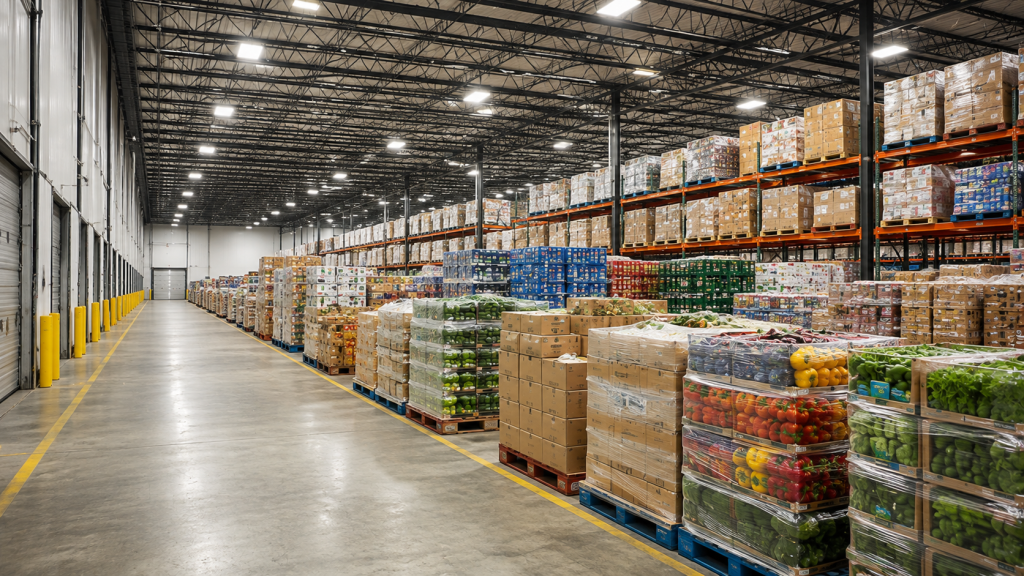
Every efficient food warehouse is built on top of solid inventory management for food products. Without it, even the best storage conditions and freight networks fall apart.
- Batch and lot tracking for full traceability and faster recalls if ever needed
- FEFO (first-expiry-first-out) rotation to reduce waste and spoilage
- Real-time stock visibility so clients always know what’s on hand
- Cycle counts and audits to catch discrepancies before they become losses
- Integration with client ordering systems for smoother replenishment
What Furniture & Retail Brands Can Learn From Food Distribution Warehouses
Furniture retailers and food distributors are tackling similar issues, though it may be an unusual comparison. Both involve high-dollar items with a lot of room, which are sensitive to improper storage, and both depend on tight schedules for warehouse traffic, and the same tight schedules to coordinate freight with cross-docking to prevent goods from becoming dead-locks in the warehouse.
Just like a beverage pallet navigating a Surrey warehouse efficiently, the same level of discipline and control that supports accurate inventory records, planned dock scheduling and reliable freight partners ensures a furniture shipment gets from the manufacturers to showroom floor. Retailers that source furniture from the US–Canada border specifically, benefit from the same.
cross-docking principles used in food logistics: less time in storage, fewer touchpoints, and faster delivery to the end customer.
For furniture and home goods brands weighing up a logistics partner, the lesson from food distribution is simple efficiency comes from systems, not just square footage.
Expert Tips for Choosing a Food Distribution Warehouse
A few practical pointers worth considering before signing with any warehousing partner:
- Ask how temperature zones are separated and monitored, and how often logs are reviewed.
- Check whether inventory management runs on real-time software or manual counts.
- Confirm cross border shipping experience if you trade internationally customs delays are costly.
- Look for a facility that offers packaging services on-site, rather than outsourcing repacking to a third party.
- Ask about average dock-to-door turnaround times for cross-docked freight.
Conclusion
Efficient food supply chains are not natural. The result of well organized food warehouses with good inventory control, reliable packages, a proper beverage storage, and efficient cross border shipping and cargo freight services. The same operational discipline is in play whether you are a food and beverage brand looking to get product moving quicker and more reliably, or a furniture retailer.
If you are experiencing bottlenecks, slow turn-around or compliance issues with your current warehousing solution, it could be time for a partner designed with these issues in mind.
Frequently Asked Questions
Everything you need to know about food distribution and logistics services.
A food distribution warehouse is a storage and logistics facility built specifically to receive, store, and dispatch food and beverage products safely. It typically includes temperature-controlled zones, sanitation protocols, and inventory tracking systems designed to protect product quality from receiving through to final delivery.
Inventory management food practices in these facilities usually rely on batch and lot tracking, FEFO stock rotation, and real-time scanning systems. This keeps stock traceable, reduces spoilage, and ensures older inventory ships before newer stock, which is critical for perishable goods.
Beverage storage requires specific handling for weight distribution, breakage prevention, and consistent temperature control, especially for items like bottled drinks, canned beverages, and kegs. General dry storage doesn’t usually need the same level of climate consistency or handling care.
Cross border shipping between Canada and the US involves customs documentation, duty classification, and compliance with food safety regulations on both sides of the border. Working with a logistics provider experienced in cross-border transportation helps avoid delays and keeps delivery timelines predictable.
Most facilities coordinate a mix of cargo freight services including truckload, less-than-truckload (LTL), drayage, and cross-docking. This allows shipments of different sizes and urgency levels to move efficiently from the warehouse to their final destination.
Yes, many logistics providers run separate zones or facilities for bulky retail goods like furniture alongside food-grade storage. While the handling requirements differ, the underlying systems, including inventory accuracy, cross-docking, and freight coordination, are very similar across both types of goods.