


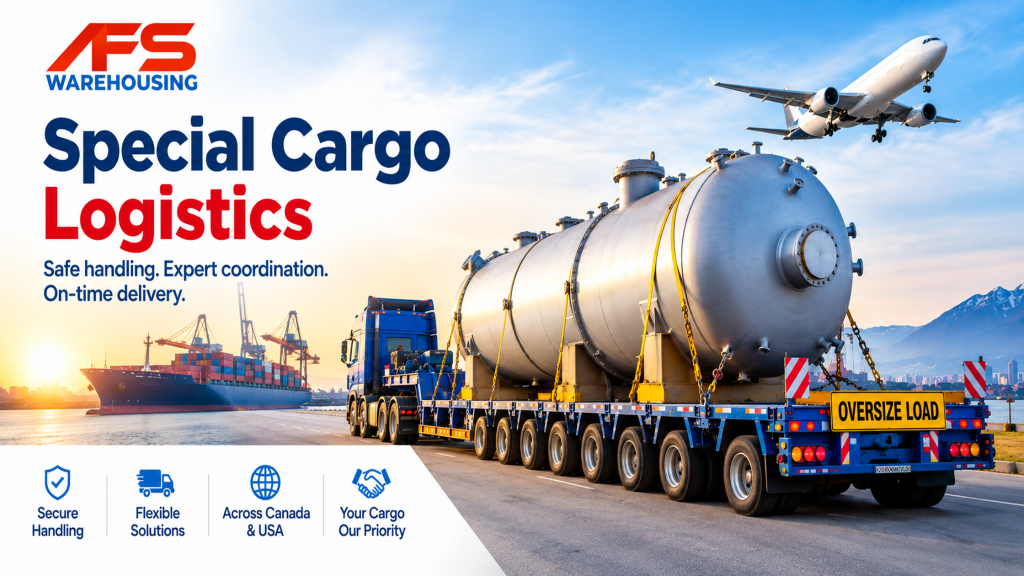
Moving unusual, oversized, fragile, or time-sensitive goods requires more planning than standard freight transportation. Special cargo logistics involves coordinating the equipment, packaging, handling procedures, documentation, and transportation arrangements needed to move shipments with specific requirements. For businesses in Vancouver, understanding these requirements can help reduce avoidable delays, protect goods during transit, and support better communication between shippers, carriers, and receivers.
What Is Special Cargo Logistics?
Special cargo logistics refers to the planning and transportation of goods that need additional care, specialized equipment, or handling arrangements beyond standard freight services. These shipments may be unusually large, heavy, fragile, sensitive to environmental conditions, or subject to specific transport regulations.
Unlike ordinary cargo, special shipments often require an assessment before transportation begins. Logistics teams may need to review the cargo’s dimensions, weight, center of gravity, packaging, loading requirements, destination access, and delivery schedule.
Examples of special cargo include:
- Oversized machinery and industrial equipment
- Heavy construction materials and components
- Fragile commercial equipment
- High-value items requiring additional security
- Temperature-sensitive goods, where suitable services are available
- Urgent shipments with specific delivery requirements
- Goods that require special permits or regulatory documentation
The exact arrangements depend on the type of cargo, its destination, and the transportation method selected.
What Are the Main Requirements for Special Cargo?
Preparing a special shipment involves more than booking a vehicle. Businesses should identify the cargo’s requirements early so that transportation partners can determine the appropriate equipment, handling procedures, and paperwork.
1. Accurate Cargo Details
Start by recording the shipment’s weight, length, width, height, quantity, and packaging type. Include information about fragile components, unusual shapes, lifting points, and any restrictions on stacking or handling.
Accurate measurements help logistics providers assess vehicle capacity, loading equipment, space requirements, and route suitability. Incorrect information can result in unsuitable equipment, revised quotes, additional handling, or delays.
2. Suitable Packaging and Protection
Packaging should match the product’s weight, shape, fragility, and expected transportation conditions. Depending on the shipment, suitable protection may include reinforced crates, pallets, cushioning, moisture barriers, protective wrapping, or secure restraints.
Heavy machinery may need to be secured against movement, while delicate equipment may require shock protection. Temperature-sensitive goods may need suitable insulated packaging and temperature-controlled transportation.
Packaging must also allow safe loading, unloading, and inspection when required.
3. Appropriate Transportation Equipment
Not every vehicle or freight service can accommodate every shipment. Oversized or heavy cargo may require specialized trailers, lifting equipment, load-securing systems, or carefully planned loading arrangements.
The transport provider should assess the shipment before confirming the equipment and route. Businesses should also consider loading facilities, unloading space, access restrictions, and whether the receiving site has the equipment needed to accept the delivery.
For large, full-load movements, a dedicated truckload service may offer the space and scheduling control that some special shipments need.
4. Permits and Regulatory Compliance
Some special shipments, particularly oversized or overweight loads, may require permits, approved routes, travel restrictions, or escorts depending on the jurisdiction and cargo specifications.
Other goods may be subject to dangerous-goods rules, import and export controls, or product-specific documentation requirements.
Requirements vary by location and shipment. Confirm the applicable rules with the transportation provider and relevant authorities before dispatch rather than assuming that standard freight procedures will be sufficient.
5. Clear Documentation and Communication
Shipment records should accurately describe the goods and include relevant measurements, declared values, handling instructions, pickup details, and delivery information.
Depending on the shipment, additional documents may include commercial invoices, packing lists, permits, certificates, or dangerous-goods documentation.
The shipper, carrier, warehouse team, and receiver should agree on responsibilities, delivery arrangements, and the process for reporting problems or changes.

How Does Special Cargo Transportation Work?
A structured process helps businesses coordinate complex shipments and identify potential problems before goods leave the origin facility.
Step 1: Assess the Shipment
The logistics provider reviews the cargo’s characteristics, dimensions, weight, handling needs, destination, and delivery deadline. This assessment helps establish whether standard freight equipment is suitable or whether a specialized arrangement is necessary.
Step 2: Plan the Route and Equipment
The next step is selecting an appropriate transportation method and planning the route. For oversized cargo, the assessment may include bridge clearances, road restrictions, turning space, permitted travel times, and access to the delivery location.
For other sensitive shipments, the focus may be on secure handling, environmental conditions, or minimizing transfers between facilities.
Step 3: Prepare the Cargo
Goods are packaged, labeled, inspected, and secured according to their handling requirements. The loading team should receive clear instructions about lifting points, weight distribution, and any restrictions on movement or stacking.
If goods are grouped into bundles or multi-packs, confirm how they will be packed and labeled before dispatch.
Step 4: Confirm Documentation
Before dispatch, the parties should check that all required transport documents, permits, declarations, and supporting records are complete. International shipments may also require customs clearance and additional import or export documentation.
Step 5: Coordinate Transportation
The carrier transports the shipment using the agreed equipment and handling procedures. Tracking updates and communication help the relevant parties monitor progress and respond to unexpected changes.
Step 6: Complete Delivery
The receiver should be prepared for the shipment’s arrival, including any necessary unloading equipment, personnel, and site access. Delivery records should confirm receipt and document visible damage or discrepancies where applicable.
Businesses that ship to online customers can also review e-commerce fulfilment options for storage, packing, and order processing alongside transportation.
What Types of Special Cargo Need Extra Care?
Different cargo categories create different transportation challenges. Identifying the relevant category helps businesses choose suitable handling arrangements.
Oversized and Heavy Cargo
Large industrial equipment, construction machinery, and oversized components may require specialized trailers, lifting equipment, route surveys, and permits. Weight distribution and securing methods are particularly important for safe transportation.
Fragile and High-Value Cargo
Sensitive equipment, delicate commercial products, and valuable items may need protective packaging, controlled handling, secure storage, and additional monitoring. Businesses should clarify insurance coverage and carrier liability before shipping.
Temperature-Sensitive Cargo
Certain goods must remain within a specified temperature range during transportation and storage. These shipments may require refrigerated vehicles, insulated packaging, temperature monitoring, or documented handling procedures.
Availability should be confirmed with the provider, particularly when the goods have strict environmental requirements.
For food products, food-grade warehousing in Vancouver may also be relevant for storage before or after transportation.
Dangerous or Regulated Goods
Some chemicals, batteries, industrial materials, and other regulated products may be subject to specific packaging, labeling, documentation, and carrier acceptance rules. Requirements depend on the product and route.
Businesses should provide accurate product information before booking and confirm whether the carrier is authorized and equipped to handle the shipment.
What Affects Special Cargo Shipping Costs and Delivery Times?
Special cargo pricing depends on the resources and arrangements needed for a particular shipment. A standard freight quote may not account for every requirement associated with unusual cargo.
Common cost and scheduling factors include:
- Dimensions and weight: Large or heavy loads may require additional capacity or specialized equipment.
- Distance and route: Route restrictions, access limitations, and required detours can affect planning.
- Handling equipment: Cranes, forklifts, specialized trailers, or additional personnel may increase costs.
- Permits and escorts: Applicable authorizations and escort arrangements may add expenses.
- Packaging and protection: Custom crates, securing materials, and protective systems may be necessary.
- Storage and handling: Temporary storage, transfers, and additional loading or unloading can affect the final cost.
- Delivery requirements: Restricted access, appointment scheduling, or limited receiving hours may influence the schedule.
- Regulatory checks: Inspections, incomplete documents, and permit issues can cause delays.
Businesses should request a detailed quote that identifies the included services, additional charges, responsibilities, and any assumptions affecting the proposed schedule. Transit times and costs should be confirmed for the specific shipment rather than treated as universal figures.
How to Choose a Special Cargo Logistics Provider
Choosing a suitable provider starts with understanding the shipment’s needs. A company experienced in ordinary freight may not automatically have the equipment or processes required for every specialized load.
Consider the following factors when comparing providers:
- Experience with similar cargo types and shipment sizes
- Access to suitable vehicles, trailers, and handling equipment
- Route assessment and permit coordination capabilities
- Clear communication about documentation and preparation
- Tracking, shipment updates, and issue escalation procedures
- Appropriate insurance options and clearly explained liability
- Transparent quotes and additional charges
- Coordination with warehouses, loading teams, and receiving facilities
Ask the provider how it plans to handle the specific shipment, what information it needs before quoting, and which responsibilities remain with the shipper.
Businesses looking for transportation support in British Columbia can explore special cargo logistics services from Logistics Vancouver. Reviewing the requirements with a provider before dispatch helps establish a clearer plan for equipment, handling, and delivery coordination.

How Businesses Can Prepare for a Special Cargo Shipment
Preparation can make communication and transportation planning more straightforward. Before booking, businesses should create a shipment checklist that covers the cargo’s physical characteristics, packaging, documents, delivery site, and handling instructions.
Confirm the following details:
- Cargo dimensions, total weight, and number of pieces
- Packaging, lifting points, and securing requirements
- Origin and destination addresses
- Site access and loading or unloading arrangements
- Required permits and regulatory documents
- Delivery deadlines and receiving availability
- Insurance coverage and liability responsibilities
- Contact details for the shipper, carrier, and receiver
Share this information with the logistics provider as early as possible. If shipment details change, communicate the changes before dispatch so that equipment, routes, and delivery arrangements can be reviewed.
Some shipments also need storage, packing, or order handling before dispatch, so it can help to review fulfilment services in Vancouver as part of the overall plan.
Plan Special Cargo Shipments with Care
Successful special cargo transportation begins with accurate shipment information, suitable equipment, appropriate packaging, and clear communication. Understanding permits, handling needs, delivery access, and potential charges before dispatch can help businesses plan more effectively and reduce avoidable complications.
Businesses arranging unusual or demanding shipments can review the special cargo services offered by Logistics Vancouver to explore relevant transportation support. Visit the Logistics Vancouver homepage to learn more about the company’s logistics services and discuss the requirements of an upcoming shipment.