

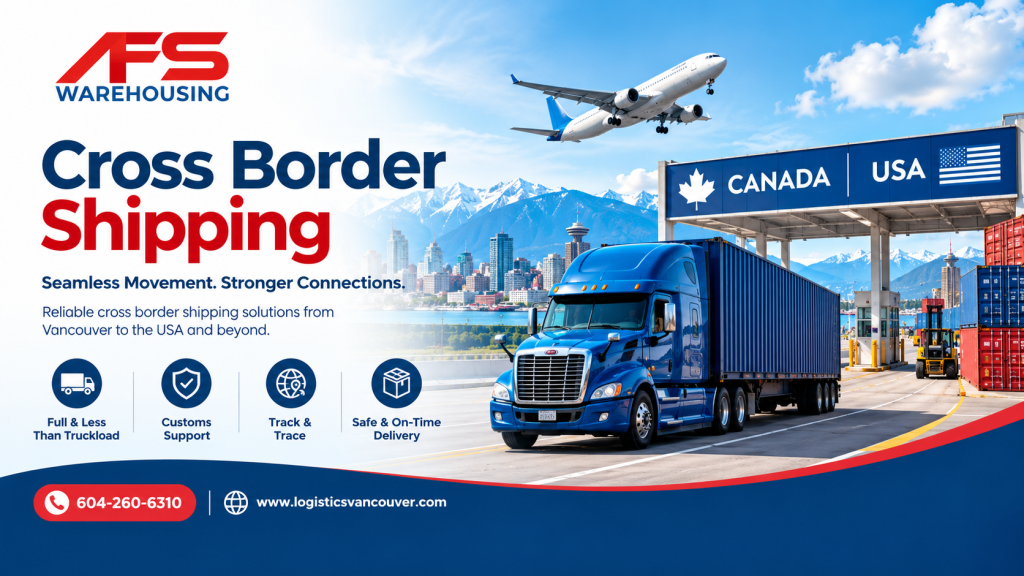
Cross border shipping is the process of moving goods from one country to another while meeting customs, documentation and transportation requirements. For Canadian businesses, that usually means preparing the shipment, choosing a freight method, filing customs information and arranging delivery in the United States. Done well, it keeps stock moving and customers happy. Done poorly, it leads to delays and unexpected charges.
Vancouver is a natural starting point, with road links to the U.S. border, a major port and an established freight network. This guide covers the process, documents, freight options, costs, and how packaging and storage fit in. Furniture is the recurring example because bulky, fragile goods show where mistakes cost the most.
| QUICK ANSWER Cross border shipping means transporting goods between countries while meeting transportation, customs, documentation and import requirements. The general process is to prepare and package the shipment, select a transportation method, complete the required paperwork, submit customs information, pay any applicable duties or taxes, and arrange final delivery. Exact requirements depend on the goods, the destination and current regulations, so confirm the details for each shipment before it leaves. |
What Is Cross Border Shipping?
Unlike domestic shipping, cross border shipping adds a customs layer. Goods leaving Canada are declared, and goods entering the U.S. are reviewed by border authorities, who check admissibility and assess any duties or taxes. Several parties share the work:
- Shipper: prepares the goods and shipment details.
- Carrier: moves the freight and coordinates the crossing.
- Customs broker: helps prepare and file customs information.
- Receiver: accepts delivery and often handles import duties.
Furniture makers sending stock to U.S. dealers, e-commerce sellers and importers all rely on this process. Because Canadian and U.S. rules both apply, one small error can hold up a whole load.
How Does Cross Border Shipping Work?
Step 1: Prepare and Package the Shipment
Start with accurate details: weight, dimensions, piece count and a clear product description. Then pack for the journey, because freight is loaded and unloaded several times. A dining set, for example, needs corner protection, wrapped finishes and sturdy pallets. When sourcing packaging supplies Vancouver suppliers carry, match the materials to the weight and fragility of the product, and label every piece so it matches the paperwork.
Step 2: Choose the Right Shipping Method
Mode depends on shipment size, urgency, destination and cost. Road freight covers most Canada–U.S. loads, while air, rail and ocean freight suit particular routes or timelines. For small parcels, shippers often compare couriers; if you are weighing the best courier service Vancouver has, check size limits and how customs paperwork is handled. For a few pallets that do not need a full trailer, less than truckload freight may fit, where available.
Step 3: Prepare Customs Documentation
Finish paperwork before dispatch and make sure values, quantities and descriptions match on every document. Requirements vary by commodity, destination and circumstances.
Step 4: Complete Customs Clearance
Customs authorities review the shipment information, assess admissibility, and determine duties, taxes or other charges. For trucks, carriers typically send cargo information electronically at least an hour before reaching the border. A customs broker can help with documentation and clearance, but a broker cannot guarantee approval or rule out an inspection.
Step 5: Transport and Track the Shipment
The carrier moves the freight, coordinates border processing and provides tracking updates. Clear communication between all parties makes holds easier to resolve.
Step 6: Arrange Final Delivery
After release, the freight continues to its destination. Schedule delivery, confirm receiving arrangements and collect proof of delivery. For home deliveries, agree on inside delivery and access in advance.
What Documents Do You Need for Cross Border Shipping?
Complete, accurate documentation is the foundation of a smooth Canada–U.S. shipment. These are the items commonly involved:
| Document or information | Why it matters |
|---|---|
| Commercial invoice | Shows what is sold, to whom and at what declared value. |
| Packing list (when needed) | Itemizes contents, piece counts and weights. |
| Customs entry information and declarations | Lets authorities assess admissibility and duties. |
| Country-of-origin details | Can affect duty treatment. |
| Permits or certificates | Needed for regulated goods. |
| Carrier or broker instructions | Keeps all parties aligned. |
This is not a mandatory checklist for every shipment. Ask your broker or carrier what applies to yours.
| EXPERT TIP Describe goods the way a customs officer reads them: product type, main material and exact quantity. Vague wording such as “furniture, assorted” invites questions and delays. |
What Are the Main Cross-Border Shipping Methods?
Road Freight
Road freight carries much of the Canada–U.S. trade and suits regional and long-distance deliveries. A logistic trucking company that coordinates pickup, border crossing and delivery reduces handoffs between parties.
Less-Than-Truckload Freight
With less than truckload freight, compatible shipments share one trailer, so you pay for the space you use. It can suit smaller commercial loads, such as a few pallets of furniture. Transit times depend on routing, handling and consolidation schedules.
Air Freight
Air freight suits time-sensitive or high-value shipments, though it generally costs more than ground options.
Rail and Ocean Freight
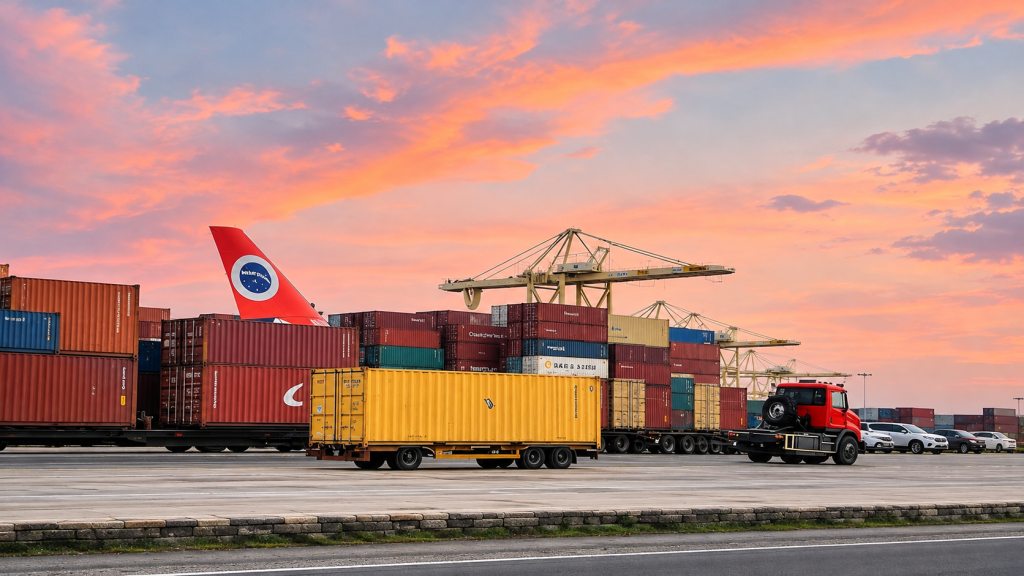
Rail and ocean freight suit larger volumes and international supply chains, often with extra handling steps such as drayage.
What Affects Cross Border Shipping Costs and Delivery Times?
Quotes and schedules depend on several factors:
- Shipment weight, dimensions, origin, destination and route
- Transportation method, fuel surcharges and carrier fees
- Customs duties, taxes and brokerage charges, where applicable
- Packaging, handling and special requirements
- Inspections, incomplete paperwork, border congestion and final-mile appointments
A “cross-border fee” is not one universal charge. Different parties bill for different things:
| Charge | Typically comes from |
|---|---|
| Transportation and fuel surcharges | The carrier |
| Duties and taxes | Customs authorities |
| Brokerage fees | The customs broker |
| Packaging, storage and handling | The service provider |
Trade measures, including tariffs on some Canadian goods such as certain furniture, have changed frequently in recent years. Ask your broker to confirm the current treatment of your product before you quote a customer.
How Warehousing and Packaging Support International Deliveries
A well-organized warehouse keeps shipment preparation predictable. Storage logistics Vancouver shippers rely on can include temporary storage before dispatch, inventory organization, order preparation and coordinating warehouse release with carrier pickup.
- Preparation: group, wrap and label pieces to match the documents.
- Protection: use packaging supplies Vancouver businesses can source to suit each product.
- Coordination: time warehouse release to the carrier’s pickup window.
Logistics Vancouver offers warehousing and storage services for this kind of preparation. When freight from several suppliers needs to be combined or moved on quickly, cross-docking services can help with shipment consolidation and handling.

Common Cross-Border Shipping Challenges and How to Reduce Them
Not every delay can be prevented, but many are avoidable:
- Use accurate descriptions and declared values, and check whether goods are restricted or need permits.
- Confirm destination import requirements before dispatch.
- Choose packaging suited to the product and journey.
- Verify consignee details and delivery arrangements.
- Allow time for customs processing and possible inspections, and keep shipment records.
How to Choose a Cross-Border Shipping Provider
A reliable cargo and logistics company should answer practical questions plainly. Look for:
- Experience with Canada–U.S. freight and support with documentation and customs coordination
- Clear communication about shipment requirements
- Freight options, tracking and warehousing that fit your load
- Transparent quotes with clearly explained charges
- Ability to handle your shipment’s size, destination and schedule
Logistics Vancouver is one option for readers researching transportation and logistics support. Its website lists truckload and less-than-truckload service, warehousing and cross-docking, along with cross-border transportation from Vancouver. Confirm availability for your specific shipment.
| Planning a cross-border shipment? Share your shipment details, destination and timeline, and we will help you think through freight options and paperwork before the truck is booked.Explore cross-border services or call 604-260-6310 | info@afstransco.com |
Conclusion
Smooth cross border shipping comes down to accurate paperwork, the right freight choice, proper packaging and coordinated delivery. Requirements change by product and over time, so review your shipment details early and confirm anything uncertain with your broker or carrier.
If you are ready to explore options, review our cross-border transportation options or browse more logistics and shipping resources.