


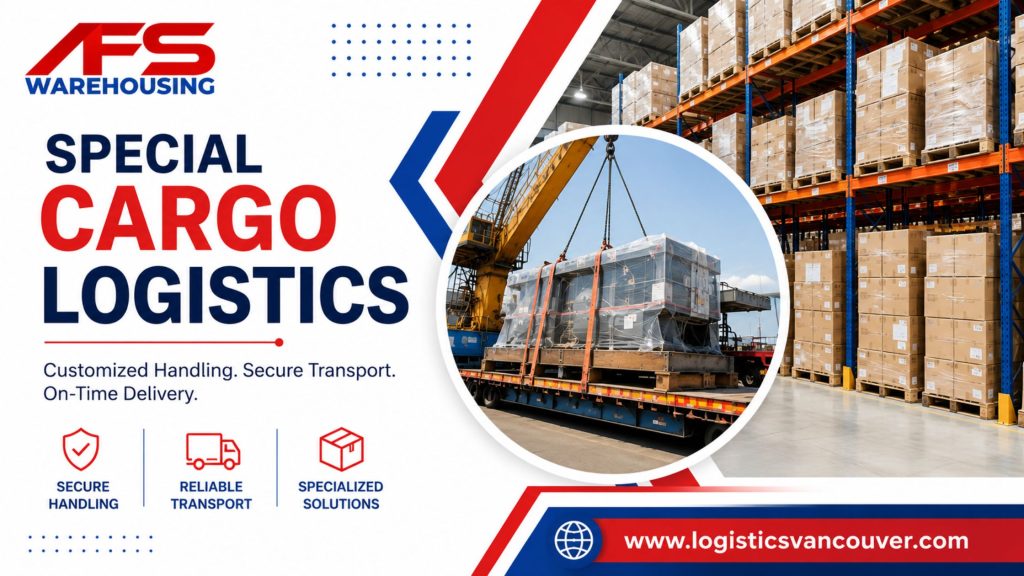
Quick Answer
Special cargo logistics is the specialised planning, handling and transport of oversized, fragile or high-value freight, such as furniture, that standard shipping methods cannot safely move. New trends including smart cross-docking warehousing, live shipment tracking, optimised full truckload freight, and protective packaging services are helping furniture businesses across the USA ship goods more safely, quickly, and cost-effectively.
Anyone who has shipped a dining table across three states knows freight isn’t as simple as slapping a label on a box. Furniture is bulky, awkward to stack, and often finished in ways that scratch or dent if handled carelessly. That’s precisely where special cargo logistics comes in a discipline built around getting difficult, high-value, or oversized shipments from A to B without a single scuff.
The freight world has shifted noticeably over the past couple of years. Retailers no longer accept ‘it probably arrived fine’ as an answer, and customers expect the same certainty they get when tracking a parcel from a marketplace app. This article walks through what’s changed, why it matters for furniture retailers and manufacturers, and how the right combination of cross docking warehousing, full truckload freight, and thoughtful packaging keeps shipments intact from the warehouse floor to the customer’s front room.
What Is Special Cargo Logistics, and Why Does Furniture Need It?
Special cargo logistics covers freight that falls outside the standard ‘box on a pallet’ category think oversized sofas, glass-topped tables, marble consoles, or high-value case goods that need climate control or extra bracing. It’s not just about size; it’s about risk. A scratched dining set or a chipped mirror frame is a returned order, a frustrated customer, and a dent in a brand’s reputation.
For furniture businesses, this typically means combining several moving parts: careful crating and cushioning, coordinated cross docking warehousing so items spend less time sitting around, freight matched to shipment size (rather than defaulting to the same method for everything), and drivers trained to load and secure irregular shapes properly.
New Trends Reshaping Safer Freight Shipping
The logistics industry doesn’t stand still, and 2026 has brought a handful of changes that are genuinely useful not just buzzwords. Here’s what’s actually moving the needle for furniture shippers.
1. Smarter Cross Docking Warehousing
Cross docking warehousing has become one of the biggest efficiency wins for bulky freight. Instead of furniture sitting in storage for days, incoming shipments are unloaded, sorted, and reloaded onto outbound trucks within hours. Less time on a warehouse floor means fewer chances for scuffs, dust damage, or misplaced inventory and it shortens delivery windows considerably.
2. Real-Time Visibility on Every Shipment
GPS-enabled trailers, digital proof-of-delivery, and condition sensors that flag rough handling or temperature swings are now fairly standard on special cargo runs. For furniture retailers, this means a customer service team can tell a customer exactly where their sectional sofa is, rather than guessing.
3. Full Truckload Freight, Optimised Rather Than Default
There’s a growing shift away from treating full truckload freight as the automatic choice for every large order. Instead, logistics teams are running the numbers on whether a dedicated truckload, a shared load, or drayage makes more sense for a given lane. When a full truckload freight run is the right call say, moving an entire showroom’s worth of stock it’s now planned with better route consolidation, reducing empty miles and fuel costs.

4. Sustainable, Purpose-Built Packaging
Cardboard corners and a roll of stretch wrap don’t cut it for a walnut credenza. Purpose-built packaging services in Vancouver and across North America are moving toward reusable crating, recycled cushioning, and corner protection engineered for specific furniture shapes cutting both damage rates and landfill waste.
5. Last-Mile Delivery That Feels Like a White-Glove Service
The final few miles matter most for furniture nobody wants a courier leaving a wardrobe on the porch in the rain. Two-person delivery teams, scheduled delivery windows, and room of choice placement are becoming the norm rather than a premium add-on.
Choosing the Right Freight Method for Furniture
Not every shipment needs the same approach. Here’s how the main options stack up against each other:
- Full Truckload Freight — best for large orders, showroom stock, and single-destination bulk moves. Fast turnaround with low handling risk since goods stay on one trailer.
- Less Than Truckload (LTL) — suited to smaller batches sharing trailer space. Moderate speed and moderate handling risk due to extra transfer points.
- Cross Docking Warehousing — ideal for high-turnover distribution where storage time needs to be minimal. Very fast, with low handling risk.
- Special Cargo Logistics — the right call for oversized, fragile, or high-value furniture pieces. Delivery is carefully planned, keeping handling risk very low.
Expert Tips for Safer Furniture Shipments
- Match the freight method to the load don’t default to full truckload freight for every order; smaller runs often move faster and cheaper via LTL.
- Ask your logistics partner how long shipments actually sit before cross docking shorter dwell time usually means fewer handling touches.
- Insist on corner and edge protection for anything with a finished surface, glass, or veneer this is where most furniture damage claims originate.
- Request photo-based proof of condition at pickup and delivery, especially for high-value pieces.
- Review packaging specs seasonally humidity and temperature swings affect wood and upholstery differently across the year.
Conclusion
Freight has quietly become more precise. The furniture businesses seeing fewer damage claims and better customer reviews aren’t necessarily spending more they’re matching the shipment to the right method, whether that’s full truckload freight for a bulk move, cross docking warehousing to cut down on storage time, or proper packaging services for anything with a finished surface. Getting special cargo logistics right isn’t a luxury add-on anymore; it’s simply what safe, modern furniture shipping looks like.
If your furniture shipments are arriving scuffed, delayed, or without any real visibility in transit, it’s worth reviewing how your current freight partner handles special cargo the fix is often smaller than expected.
Frequently Asked Questions
Everything you need to know about special cargo, freight, and furniture logistics.